
How To Get Your Business Found Online: Practical Guide for Small Businesses

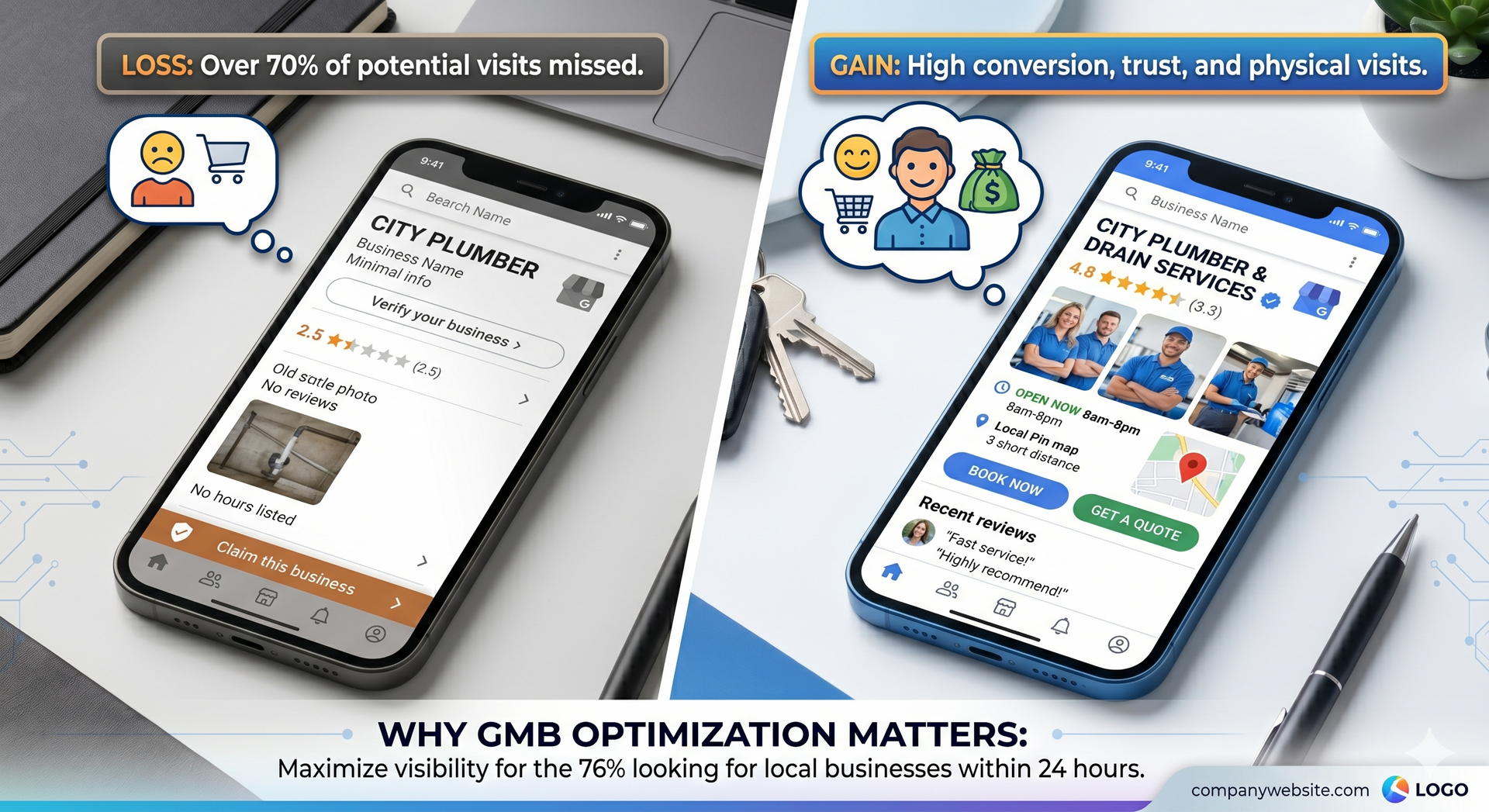
76% of people who search for local businesses visit within 24 hours—but most small businesses still haven't optimized their Google My Business profile. What simple changes could transform those searches into paying customers walking through your door?


As seen on

And 300+ sites

Verified by  AmpiFire

Key Takeaways

  • 76% of people who search for local businesses visit a physical store within 24 hours, making your online presence vital for driving foot traffic
  • Optimized Google My Business profiles significantly increase purchase intent and visit likelihood compared to incomplete listings
  • Strategic content marketing that targets high-intent local searches can dramatically increase monthly inquiries
  • Small businesses can outcompete larger brands by focusing on location-specific search terms that big companies often overlook

Local search behavior has fundamentally changed how customers find and choose businesses. Combining a strong Google presence with smart content marketing represents one of the most powerful growth opportunities for small business owners who want to capture their share of nearby customers actively looking for their services.


Why 76% of Local Searches Lead to Store Visits Within 24 Hours


The rise of smartphones and voice search has created an immediate connection between online discovery and offline purchases. When someone searches for "Italian restaurant near me" or "emergency plumber," they're not browsing for entertainment—they're ready to take action. This urgency creates a golden window for local businesses to capture high-intent customers at the exact moment they need services.

The shift toward mobile-first searching means customers expect instant answers about business hours, locations, phone numbers, and services. Businesses that optimize for this immediate-need mindset consistently see higher conversion rates from customers who find them online.

What makes this statistic even more compelling is the quality of these visits. Unlike general web traffic that might browse and leave, local searchers arrive with specific intent and purchasing power. They've already made the mental decision to buy—they just need to choose which local business gets their money.


The Google My Business Foundation That Drives Customer Visits


Google My Business serves as the digital storefront that determines whether potential customers choose to visit or keep scrolling. The platform acts as a direct bridge between search intent and business discovery, making optimization non-negotiable for serious local businesses.


1. Claiming Your Business Profile Gets You Started


The first step involves claiming ownership of your business listing, which, surprisingly, many local businesses still haven't completed. This basic action immediately improves visibility in Google Search and Maps results. The claiming process requires verification through phone, email, postcard, video, or instant verification methods, establishing authenticity that Google recognizes for improved profile management capabilities.

Once claimed, businesses gain control over critical information that customers see first: business name, address, phone number, website, and hours of operation. Inconsistent or outdated information across different online platforms confuses both customers and the systems that rank businesses online, making accurate profile completion essential.


2. Complete Profiles Drive Higher Purchase Intent


Profile completion goes far beyond basic contact information. High-performing profiles include detailed business descriptions, service categories, attributes like "wheelchair accessible" or "accepts credit cards," and regularly updated photos showcasing products, services, and the business environment.

Customer reviews and business owner responses create social proof that significantly influences purchase decisions. Businesses that actively encourage reviews and respond professionally to both positive and negative feedback demonstrate reliability and customer service commitment that translates into higher conversion rates.

The "Posts" feature allows businesses to share updates, offers, events, and news directly in their Google My Business profile. These posts appear in search results and Google Maps, providing additional opportunities to capture attention and communicate value propositions.


3. Mobile Optimization for Fast Load Times


Mobile searchers expect instant access to information, making page speed critical for keeping potential customers on your site. Page speed significantly impacts user engagement and conversion rates, with slower sites leading to higher bounce rates and lost customers. Some studies suggest that a 1-second delay can reduce conversions by around 7%, and that more than half of mobile users will abandon a site that takes longer than three seconds to load.

Mobile optimization extends beyond speed to include click-to-call buttons, easy-to-find contact information, simplified navigation, and location-based content. Local searchers frequently need immediate access to phone numbers for questions or directions for visits, making these elements vital for conversion optimization.


Finding the Right Search Terms for Your Area


Traditional approaches to finding search terms focus on volume metrics, but local businesses need a different lens — one that prioritizes relevance and customer intent over raw traffic numbers. The most targeted terms often have lower search volumes but much higher conversion potential.


1. Target High-Intent Over High-Volume Terms


Some search terms reveal customers who are ready to act right now. Instead of competing for a broad term like "plumbing," local plumbers get better results by showing up for "emergency plumber [city name]" or "water heater repair near me" — searches that signal immediate need and a clear preference for a nearby provider.

Service-specific location combinations create powerful targeting opportunities. Terms like "pediatric dentist downtown [city]," "organic grocery store [neighborhood]," or "24-hour locksmith [area]" attract customers with specific needs and geographic preferences, resulting in higher-quality traffic and improved conversion rates.


2. Find Long-Tail Opportunities Big Brands Miss


Large corporations struggle to compete for hyper-local, specific search combinations that small businesses can dominate. While national chains might rank for "pizza delivery," local restaurants can capture "gluten-free pizza delivery [neighborhood]" or "late-night pizza [specific area]" — searches that bigger brands routinely overlook.

These longer, more conversational search phrases reflect how people actually speak, especially with voice search on the rise. Queries like "best family restaurant with outdoor seating near [landmark]" or "affordable auto repair shop [specific neighborhood]" mirror natural speech patterns and signal highly targeted intent.


"Stop guessing and start growing. Get your Free Google My Business Visibility Audit today and claim your share of the 76%!

Content Marketing Strategies That Build Local Authority


Content marketing for local businesses requires a strategic approach that balances broad appeal with community-specific relevance. The most effective local content demonstrates expertise while addressing local customer needs and interests.


1. Create Location-Specific Blog Content


Location-specific content establishes local expertise and pulls in nearby readers who are actively searching for answers. Blog posts like "Best Spring Landscaping Plants for [Climate Zone]" or "Preparing Your [City] Home for Winter Weather" demonstrate local knowledge while speaking directly to a geographically relevant audience.


Community event coverage, local business spotlights, and neighborhood guides create valuable content that residents share and that signals local relevance to search platforms. This naturally attracts links from other local sites and boosts social media engagement in your area.


Industry expertise combined with local insights creates particularly powerful content. A local HVAC company writing about "Energy-Efficient Cooling Solutions for [City's] Hot Summers" provides specific, actionable advice that demonstrates both technical knowledge and local understanding.


2. Partner with Local Businesses for Cross-Promotion


Strategic partnerships with complementary local businesses create mutual marketing opportunities that expand reach without increasing advertising costs. A local gym partnering with a nutritionist for joint content creation reaches both customer bases while providing valuable information.


Cross-promotional content takes many forms: joint blog posts, shared social media campaigns, collaborative events, and reciprocal referrals. These partnerships build local network effects that strengthen community presence and generate quality backlinks from local websites.


3. Use Social Media to Connect with Your Community


Local social media content creates a community connection that larger brands cannot replicate. Sharing behind-the-scenes content, featuring local customers, celebrating community milestones, and participating in local conversations builds authentic relationships with nearby customers.


Platform-specific strategies maximize local engagement. Instagram Stories showcasing daily operations, Facebook event promotion for local gatherings, and LinkedIn posts about community involvement create multiple touchpoints that keep your business visible and trusted in the community.


Real Results: How Getting Found Online Transforms Small Business Growth


The benefits of building a strong local online presence translate into measurable business growth when implemented strategically. Real case studies demonstrate the transformative potential of focused digital marketing efforts.


1. Monthly Inquiries Can Increase Dramatically


The benefits aren't just theoretical. Through Google My Business optimization, targeted content creation, and showing up for the right searches, businesses across service industries have reported substantial increases in monthly inquiries within just a few months of focused effort.


The transformation involves multiple strategic elements working together: complete business profile optimization with professional photos and detailed service descriptions, consistent NAP (name, address, phone) information across all online directories, active review management with professional responses, and location-specific content targeting local painting needs and seasonal considerations.


2. A Consistent Online Presence Expands Commercial Reach


Businesses that commit to building and maintaining their online presence often experience continued growth, opening up commercial market opportunities that traditional marketing methods rarely reach.

The results tend to compound over time. As visibility and credibility build through consistent effort, businesses gain competitive advantages that become increasingly difficult for competitors to close.


Start Building Your Online Presence Today for Immediate Competitive Advantage


Getting your business found online doesn't require a massive budget or deep technical expertise, but it does demand strategic planning and consistent execution. Small businesses can begin seeing results within weeks by focusing on the fundamentals that improve visibility where customers are already searching.

The landscape continues to evolve — AI, voice search, and mobile-first browsing are all reshaping how customers find businesses nearby. Those who build strong foundations now are better positioned to adapt as things shift, rather than playing catch-up later.


Start with Google My Business, focus on the search terms your customers actually use, and create location-specific content that demonstrates expertise and community connection. These foundational steps create momentum for broader digital marketing efforts that drive measurable business growth.


Is your online profile ready for tomorrow's business? Book your Free Growth Strategy Session now to learn how simple changes transform searchers into paying customers

Recent Posts

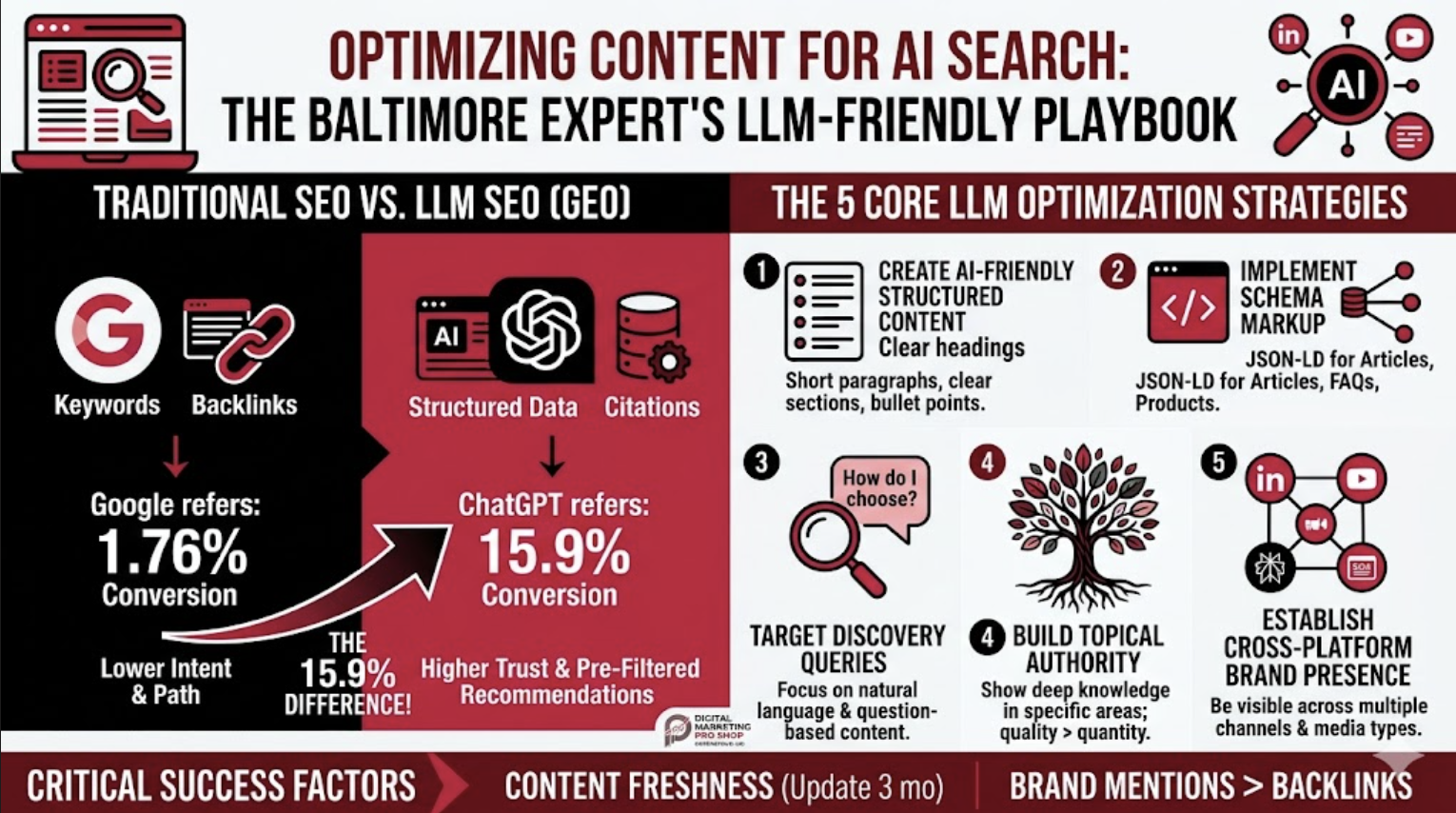
LLM SEO: How to Optimize Your Content for AI Searc
By Chet Holloway May 29, 2026
Discover how AI search optimization works. Learn why ChatGPT traffic converts at 15.9% and how to keep your Baltimore business visible in AI citations
By Chet Holloway May 22, 2026
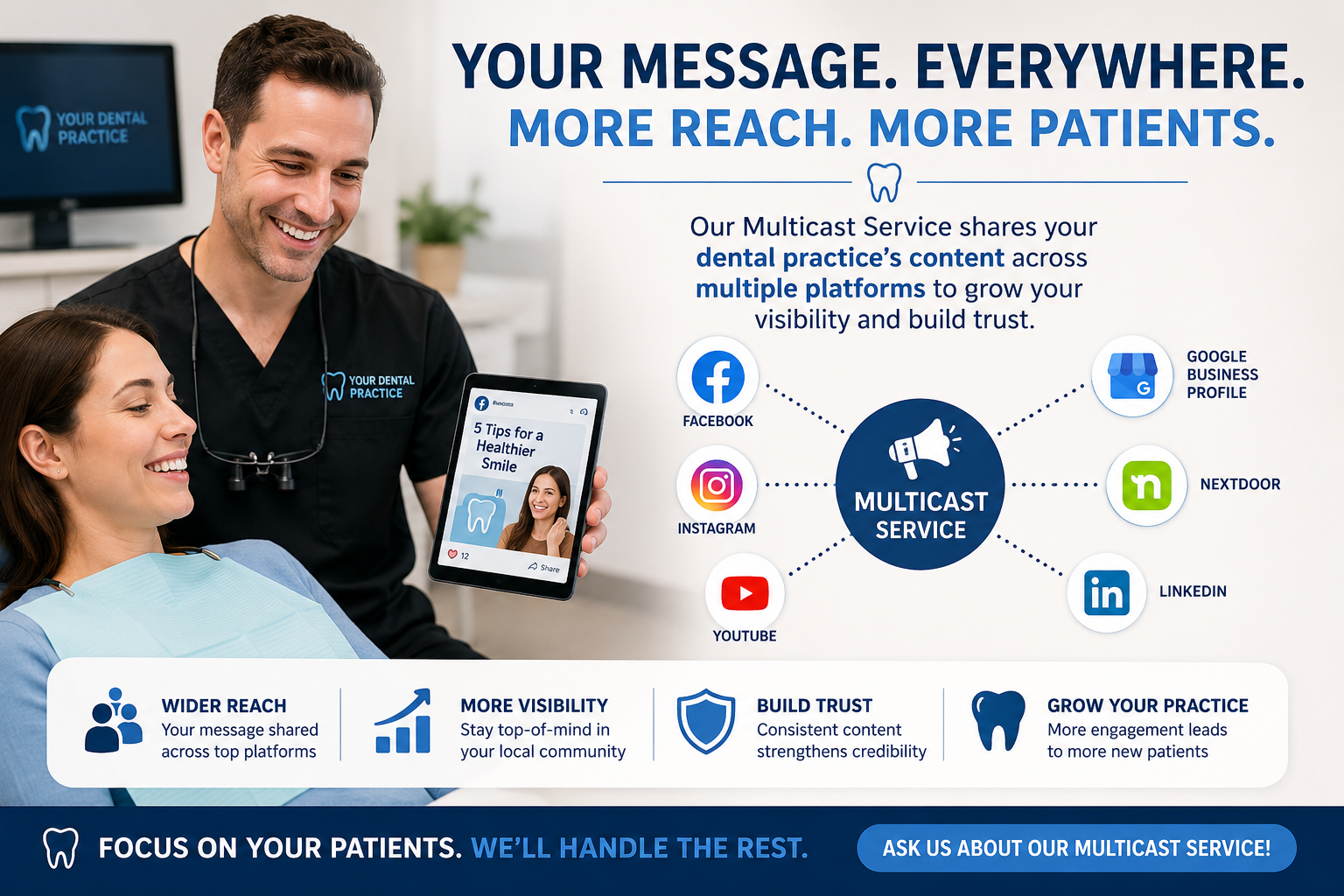
AI search engines like ChatGPT and Perplexity only mention a handful of brands per query. Multicasting, crawlable reviews, and consistent brand mentions across independent sources are what get your business recommended.

By Chet Holloway May 19, 2026
Invisible to customers? A Baltimore expert breaks down how an omnichannel marketing strategy drives revenue & visibility without expensive paid ads.
By Chet Holloway May 12, 2026
Online Search is How Homeowners Find Roofing Contractors While word-of-mouth referrals and repeat business remain important sources for finding contractors, today's homeowners increasingly conduct extensive research before choosing a roofing contractor, with 96% searching online for roofing companies. Online search engines account for 54% of how homeowners initially discover roofing services, making digital presence crucial for business growth. "This shift in consumer behavior creates both opportunity and urgency for roofing businesses. Homeowners spend significant time reading blogs, reviews, and case studies before making contact," says a spokesperson from Digital Marketing Pro Shop LLC , an agency helping Baltimore roofers enhance their online presence. "They want to understand their roofing problems, compare solutions, and identify contractors who demonstrate competence and reliability." Content Marketing Transforms Qualified Lead Generation Effective content marketing goes beyond posting random updates on social media. It requires a systematic approach that addresses specific homeowner concerns while showcasing the contractor's expertise and reliability. The most successful roofing companies follow four key principles that transform casual browsers iqualified leads. 1. Know Your Ideal Customer Demographics and Pain Points Understanding customer demographics prevents wasted time on unqualified leads. A contractor specializing in commercial metal roofing shouldn't create content targeting residential asphalt shingle replacements. Successful content marketing starts with identifying the specific customer segments a roofing business serves best. Pain points vary significantly among homeowner demographics. Young families might worry about roof safety and energy efficiency, while older homeowners may prioritize durability and low maintenance. Emergency situations like storm damage create urgent pain points requiring immediate solutions. Content that addresses these specific concerns attracts homeowners who need exactly what the contractor provides. 2. Use Clear Language and High-Quality Project Photos Technical jargon confuses potential customers rather than impressing them. Homeowners want straightforward explanations about roofing problems and solutions, delivered in language they can understand. The goal is educating customers, not demonstrating industry vocabulary mastery. High-quality project photos tell compelling stories that written descriptions cannot match. Before-and-after images of actual projects demonstrate competence while helping homeowners visualize potential outcomes for their properties. Stock photos lack authenticity—homeowners can spot generic images immediately, which undermines trust and credibility. 3. Optimize for Local Search and Google's 3-Pack Local search optimization is crucial for roofing companies since they serve specific geographic areas. Google's Local 3-Pack captures around 44% of all clicks and appears in 93% of local searches, making visibility in these results essential for lead generation. Optimization requires consistent business information across all online platforms, positive customer reviews, and location-specific content. Roofing companies that optimize their Google My Business profiles and create content targeting local search terms report 50% or more increases in local leads. The key is matching content to the specific searches homeowners perform when seeking roofing services in their area. 4. Include Strategic Calls to Action Even the most informative content fails without clear next steps for interested homeowners. Strategic calls to action guide readers from content consumption to actual contact, whether through phone calls, estimate requests, or consultation bookings. The most effective CTAs feel natural within the content flow rather than pushy or sales-focused.
By Chet Holloway May 12, 2026
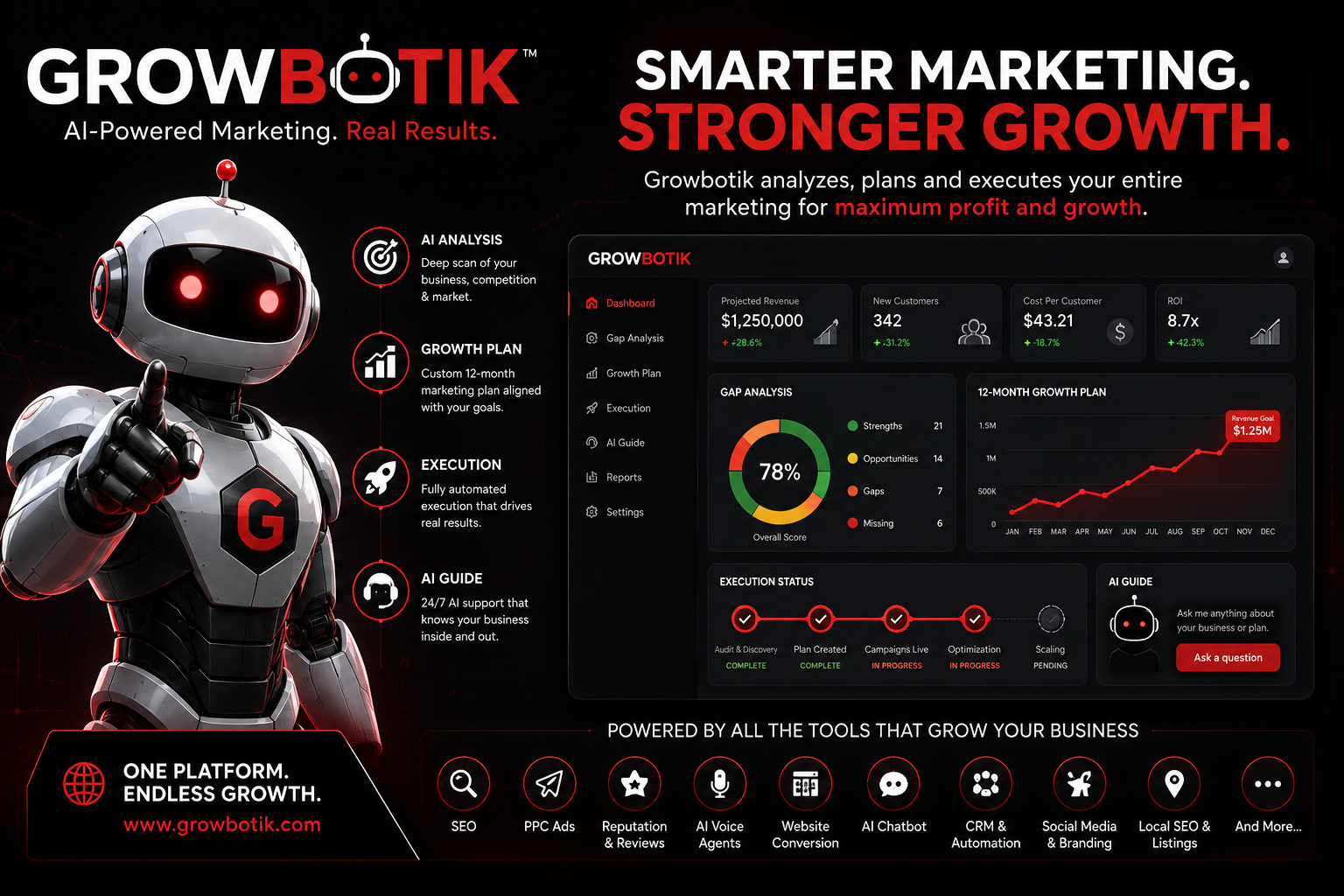
Predictive Revenue Architecture: A 12-Month Marketing Growth Plan Engineered by Growbotik
AI Search for Law Firms: How to Stay Visible When Clients Don’t Click Websit
By Chet Holloway May 10, 2026
AI Search for Law Firms: How to Stay Visible When Clients Don’t Click Websites. Learn how law firms can adapt to AI-driven search and keep attracting clients with four essential visibility strategies.
By Chet Holloway May 7, 2026
Stop guessing and start architecting. Discover Pro Ai: the smarter way for businesses to identify marketing gaps and build a data-backed 12-month growth plan

By Chet Holloway May 5, 2026
Creation is only half the battle. Discover why distribution automation is the key to ROI and how our high-precision architecture turns one asset into total market omnipresence.
By Chet Holloway May 5, 2026
Ready to dominate the local market? Baltimore content marketing experts at Digital Marketing Pro Shop explain how to architect a high-precision organic traffic engine
April 24, 2026
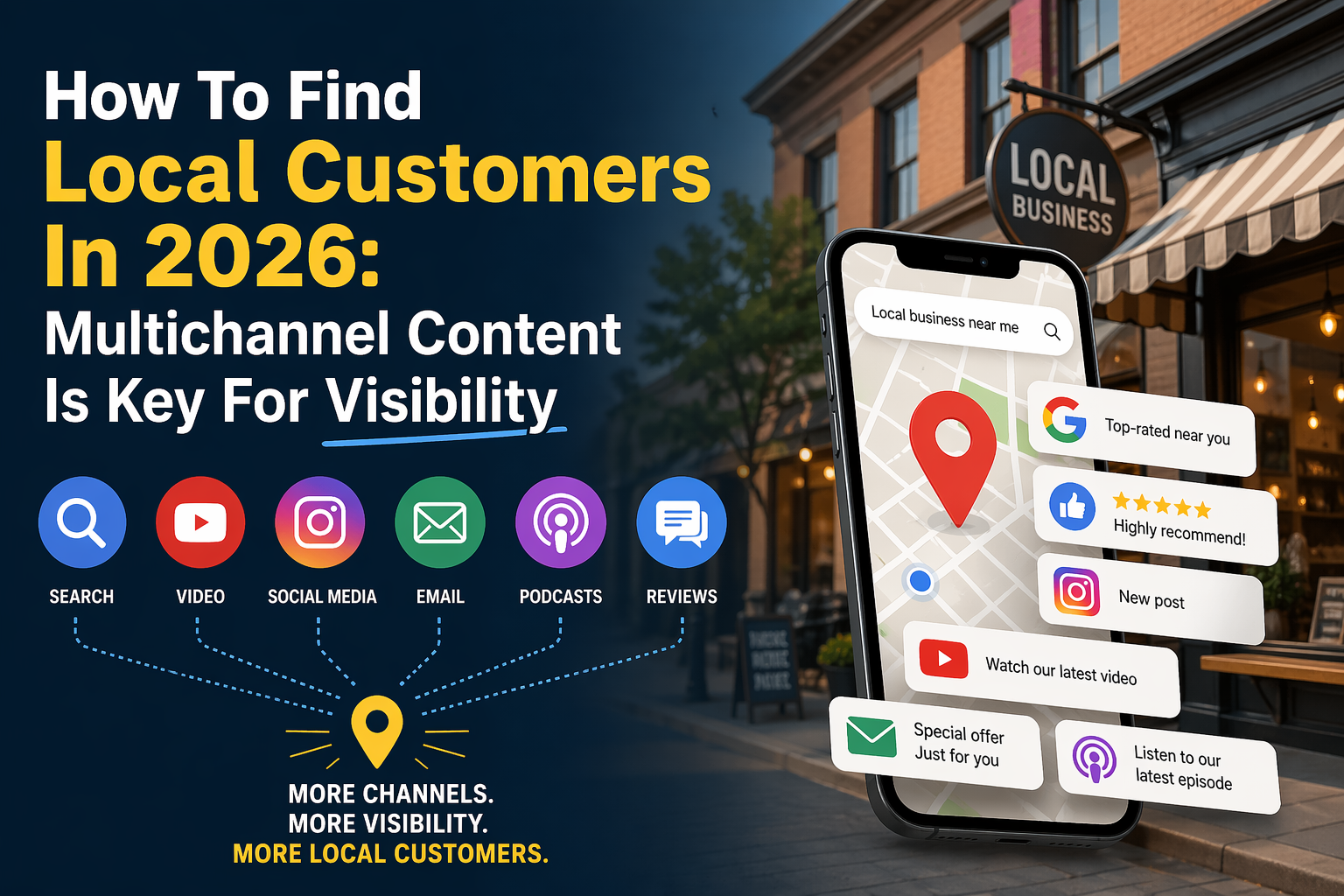
Looking for local customers in 2026? Discover why multichannel content is the key to local visibility and how to architect a strategy that dominates your market
Show More

Share this article