
How to Boost Brand Mentions for AI Visibility: A Baltimore Dentist's Guide


As seen on

And 300+ sites

Verified by  AmpiFire

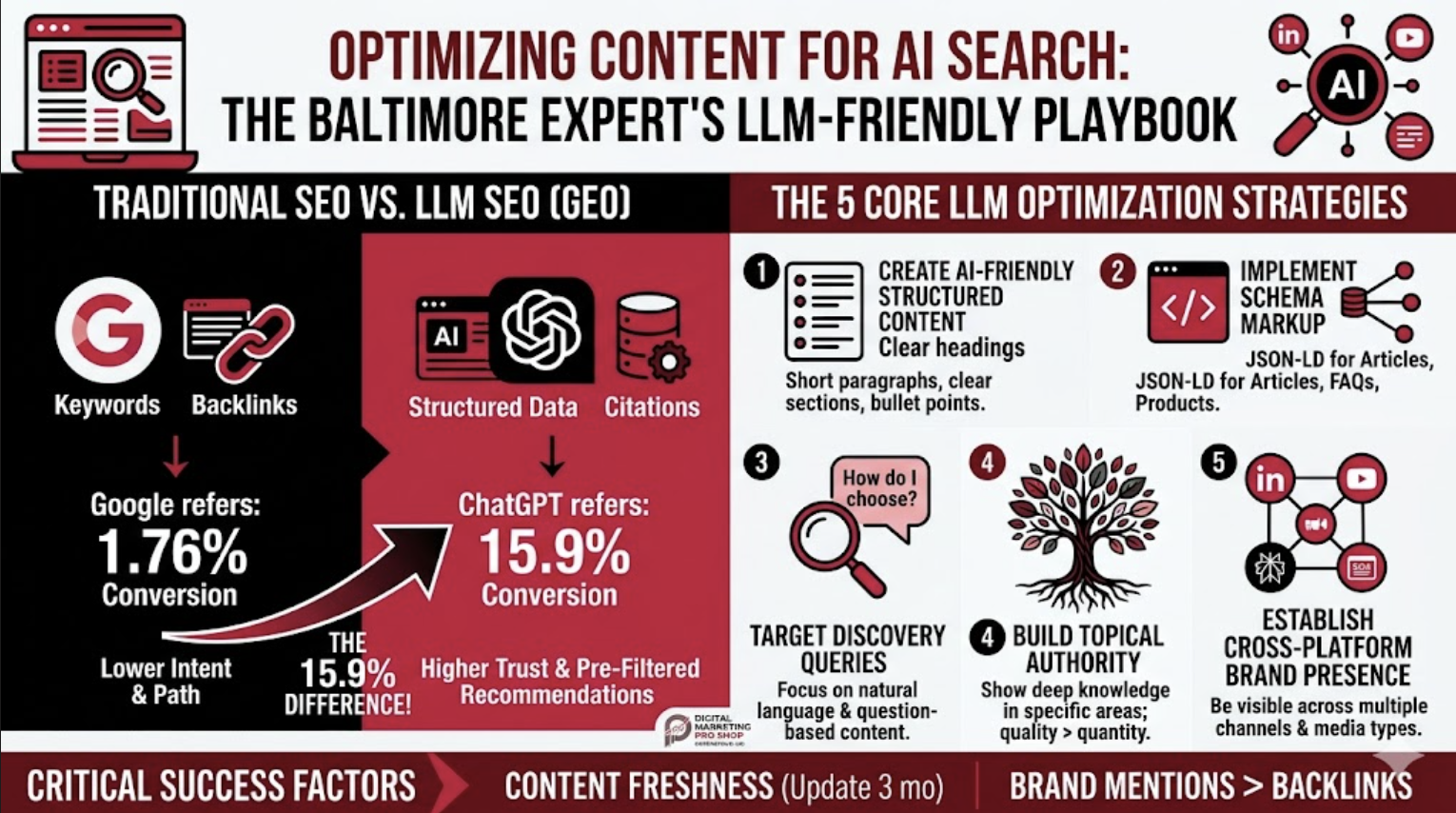
AI search engines like ChatGPT and Perplexity only mention a handful of brands per query. Multicasting, crawlable reviews, and consistent brand mentions across independent sources are what get your business recommended.

Key Takeaways


  • Brand mentions correlate 3x more strongly with AI visibility than traditional backlinks, making multichannel distribution vital for AI search success


  • AI models use Named Entity Recognition to build brand knowledge graphs, prioritizing consistent mentions across high-authority platforms


  • The hub-and-spoke content strategy can increase AI citations by up to 325% through strategic distribution across multiple channels


  • Technical implementation, including schema markup and structured data, significantly improves AI crawling and brand recognition


  • Systematic tracking of brand mentions across AI platforms reveals optimization opportunities and competitive gaps


Recent analysis of approximately 75,000 brands by Ahrefs reveals that branded web mentions have the strongest correlation (0.664) with appearing in AI-generated overviews, significantly outperforming traditional metrics like backlinks. For Baltimore businesses and marketing teams everywhere, this marks a real shift in how online authority gets built.


Brand Mentions Correlate 3x More Strongly with AI Visibility Than Backlinks


Brand mentions drive AI visibility more effectively than any other ranking factor. While traditional SEO practitioners have spent years chasing backlink profiles and domain authority, AI systems evaluate credibility through an entirely different lens. Over 60% of Google searches now result in zero clicks, with AI-powered overviews providing direct answers that reference specific brands within generated responses.


This shift represents a fundamental change in how authority is measured online. Instead of rewarding keyword optimization or backlink volume, AI systems evaluate credibility based on how often and in what context a brand is referenced across the web. Platforms like ChatGPT, Perplexity, and Google AI Overviews now reference brands within generated answers, making discoverability through brand mentions critical for business success.


Research demonstrates that broadly distributing content can increase AI citations by up to 325%, underscoring the significance of multichannel strategies for AI visibility. The companies achieving the strongest AI visibility understand that mentions from respected media outlets, research publications, and industry databases reinforce brand authority, serving as evidence for AI systems to trust and recommend their brand


Why AI Models Prioritize Brand Entities Over Keywords


AI systems operate fundamentally differently from traditional search engines. Rather than matching keywords to pages, they identify and evaluate entities—people, brands, products, and organizations—through sophisticated analysis of contextual relationships and semantic meaning.


1. Named Entity Recognition Creates Brand Knowledge Graphs


AI models identify entities through Named Entity Recognition (NER) to understand the subject of conversations and content. This process creates knowledge graphs that map relationships between brands, topics, and contexts. When AI encounters multiple mentions of a brand across different sources, it strengthens the entity's position within its knowledge framework.


These knowledge graphs become the foundation for AI recommendations. A brand with robust entity recognition appears more frequently in AI-generated responses because the system has confidence in its understanding of what the brand represents and when it should be recommended.


2. Third-Party Mentions Signal Authority to AI Systems


Independent validation carries enormous weight in AI decision-making processes. AI systems can detect both explicit and implicit brand mentions by analyzing semantic relationships, embeddings, and context mapping. When multiple independent sources reference a brand positively, AI interprets this as consensus validation.


Mentions in respected media outlets, research publications, or industry databases reinforce a brand's authority, serving as evidence for AI to trust the brand. This third-party validation creates a multiplier effect—each additional source strengthens the overall authority signal exponentially rather than additively.


3. Consistent Brand Naming Prevents AI Recognition Fragmentation


Inconsistent brand naming across different platforms creates conflicting signals for AI, leading to fragmentation and reduced brand recognition. A brand entity is defined as a business that AI systems can confidently recognize and understand due to its clear definition across consistent and authoritative sources.

When brands maintain consistent naming conventions, descriptions, and positioning across all platforms, AI systems can confidently aggregate mentions and build stronger entity profiles. This consistency prevents dilution of brand authority and ensures maximum recognition potential.


Ready to Turn One Answer Into Hundreds of Patient-Attracting Mentions?


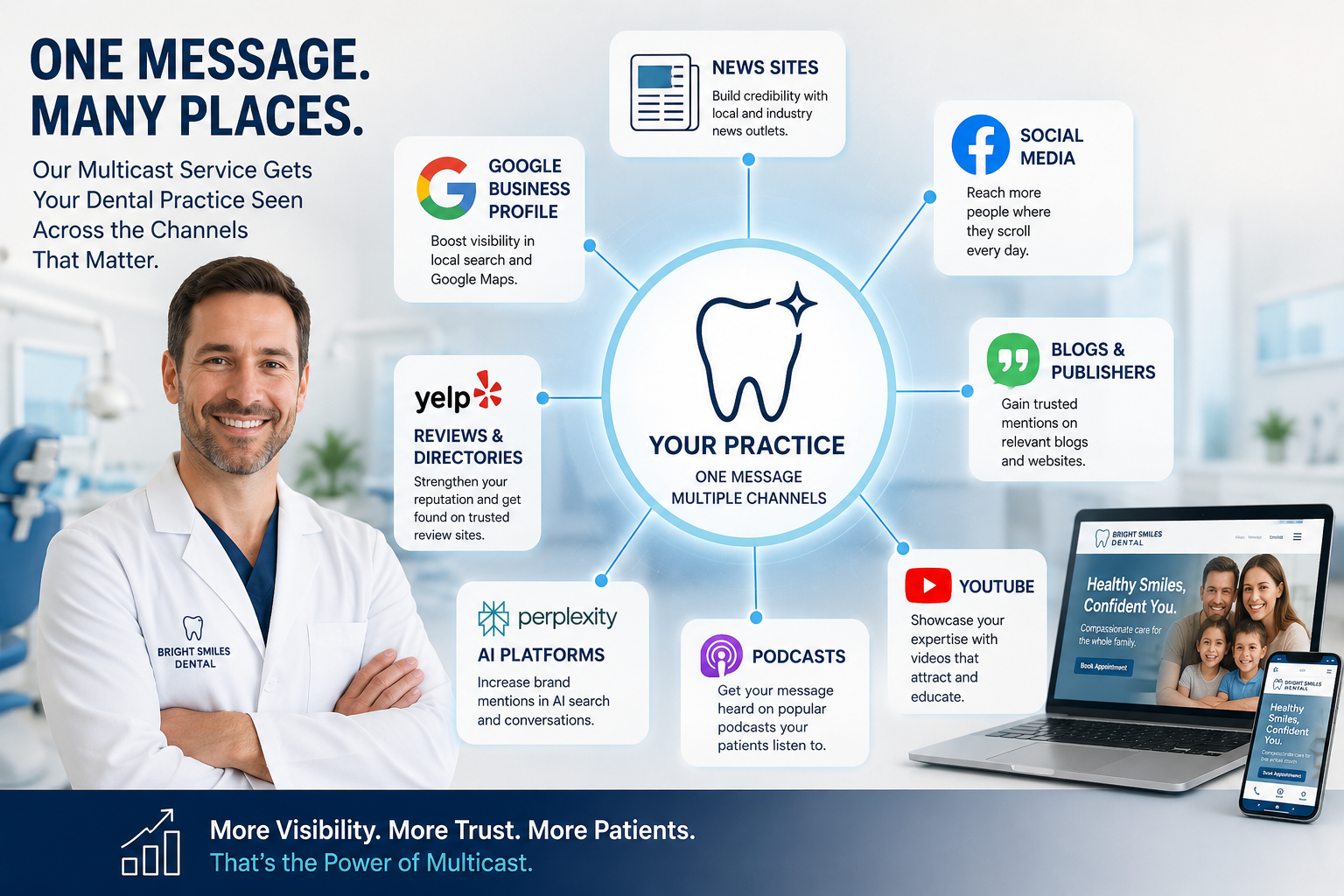
Don't let your dental clinic get left behind in the age of AI search. Our Done-for-You Multicasting Service takes your clinic's expertise and automatically broadcasts it as high-authority news articles, videos, podcasts, and social posts—building the exact brand authority AI engines love to recommend.

The Hub-and-Spoke Multichannel Content Strategy


Effective multichannel distribution follows a structured approach that maximizes both efficiency and impact. The hub-and-spoke model creates a centralized content foundation while strategically distributing across high-value platforms.


1. Create AI-Citable Hub Content


AI-citable content differs significantly from traditional SEO content. AI systems prioritize clear, factual information that can be easily extracted and referenced. This means creating content with clear headers, FAQs, and concise bullet points that make information readily accessible.


Original data, research, and case studies provide AI with specific facts to cite. When content includes measurable outcomes, statistics, and unique insights, AI systems recognize it as valuable source material. The key is structuring this information so AI can easily parse and extract relevant details for user queries.


2. Distribute Across High-Authority Spoke Platforms


Strategic platform selection amplifies content reach and authority signals. Industry publications provide editorial validation that AI systems recognize as credible. Guest contributions to respected platforms create authoritative backlinks while positioning brands as thought leaders in their respective fields.


Community forums and discussion platforms like Reddit and Quora have become vital data sources for AI systems. ChatGPT and Perplexity regularly reference community discussions when forming their answers, making active participation in these spaces increasingly valuable for brand visibility.


 3. Repurpose Into Multiple Content Formats


Multimodal content distribution increases the likelihood of appearing in AI-generated answers across different content formats. A single piece of research can become a blog post, video content, social media posts, and community forum discussions—each targeting different AI consumption patterns.


This repurposing strategy ensures brand mentions appear across diverse content types and platforms, strengthening entity recognition while maximizing content investment returns. Each format serves different AI training data sources, creating multiple pathways for brand discovery.


Technical Implementation for AI Crawling


Technical foundations determine whether AI systems can access and properly interpret brand information, making implementation critical for visibility success.


Schema Markup for Brand Recognition


Schema markup provides AI systems with structured data that clarifies brand identity and relationships. Organization schema tells AI exactly who the brand is and what services they provide, while Product schema describes offerings in machine-readable format. Review and AggregateRating schema make customer reviews accessible to AI crawlers.


FAQ schema makes answers directly quotable by AI systems, increasing the likelihood of citation in generated responses. Proper schema implementation transforms unstructured content into AI-readable data that can be confidently referenced and cited.


Structured Data Across All Platforms


Consistent structured data implementation across all platforms reinforces brand entity recognition. This includes ensuring content renders as HTML rather than JavaScript-only loading, which may not be crawlable by AI bots. Key content—especially reviews and FAQs—must render in the initial HTML response to be accessible.


Robots.txt configuration should explicitly permit GPTBot (OpenAI), ClaudeBot (Anthropic), Google-Extended (Gemini), and PerplexityBot. Many companies inadvertently block these crawlers, preventing AI systems from accessing their content and building brand recognition.


Measuring and Optimizing AI Mention Performance


Systematic measurement and optimization ensure multichannel distribution strategies deliver measurable results.


Track Brand Mentions Across AI Platforms


Manual testing provides immediate insights into current AI visibility. Ask ChatGPT, Perplexity, and Gemini 10-15 questions that customers would typically ask, noting whether the brand appears, in what position, and in what context. Use incognito browser settings to avoid personalized responses that might skew results.


Key metrics include AI mention rate (how often the brand appears), citation quality (first recommendation versus alternative mention), query coverage (which types of questions trigger brand mentions), and sentiment (how AI characterizes the brand when mentioned). Monthly tracking reveals directional trends and optimization opportunities.


Monitor Competitor AI Visibility


Competitive analysis reveals market positioning and identifies improvement opportunities. Document which competitors appear when your brand doesn't, analyze their mention contexts, and identify gaps in your multichannel distribution strategy.


Understanding competitor AI visibility patterns helps prioritize platform investments and content strategies. If competitors consistently appear in specific AI responses, investigate their presence on platforms and content types that generate those mentions.


Multichannel Distribution Delivers Measurable AI Visibility Results


Companies implementing multichannel distribution strategies achieve significant improvements in AI visibility metrics. Research from Brandi AI shows that brands producing 12 or more optimized pieces of content per month achieve up to 200x faster visibility gains compared to those producing just four pieces.


The brands achieving the strongest AI visibility understand that success requires consistent effort across multiple channels rather than sporadic optimization attempts. Authority signals compound over time, making sustained multichannel distribution vital for long-term AI visibility success.


For Baltimore marketing teams and businesses looking to close the gap between Google rankings and AI visibility, the path forward is the same: build genuine authority across multiple surfaces, earn mentions from diverse sources, and make content easy for both humans and machines to parse.


Want 200x faster visibility gains in AI search? Let our dental

multicasting engine handle the heavy lifting for you.

Recent Posts

LLM SEO: How to Optimize Your Content for AI Searc
By Chet Holloway May 29, 2026
Discover how AI search optimization works. Learn why ChatGPT traffic converts at 15.9% and how to keep your Baltimore business visible in AI citations
google-my-business-optimization-local-seo-tips
By Chet Holloway May 28, 2026
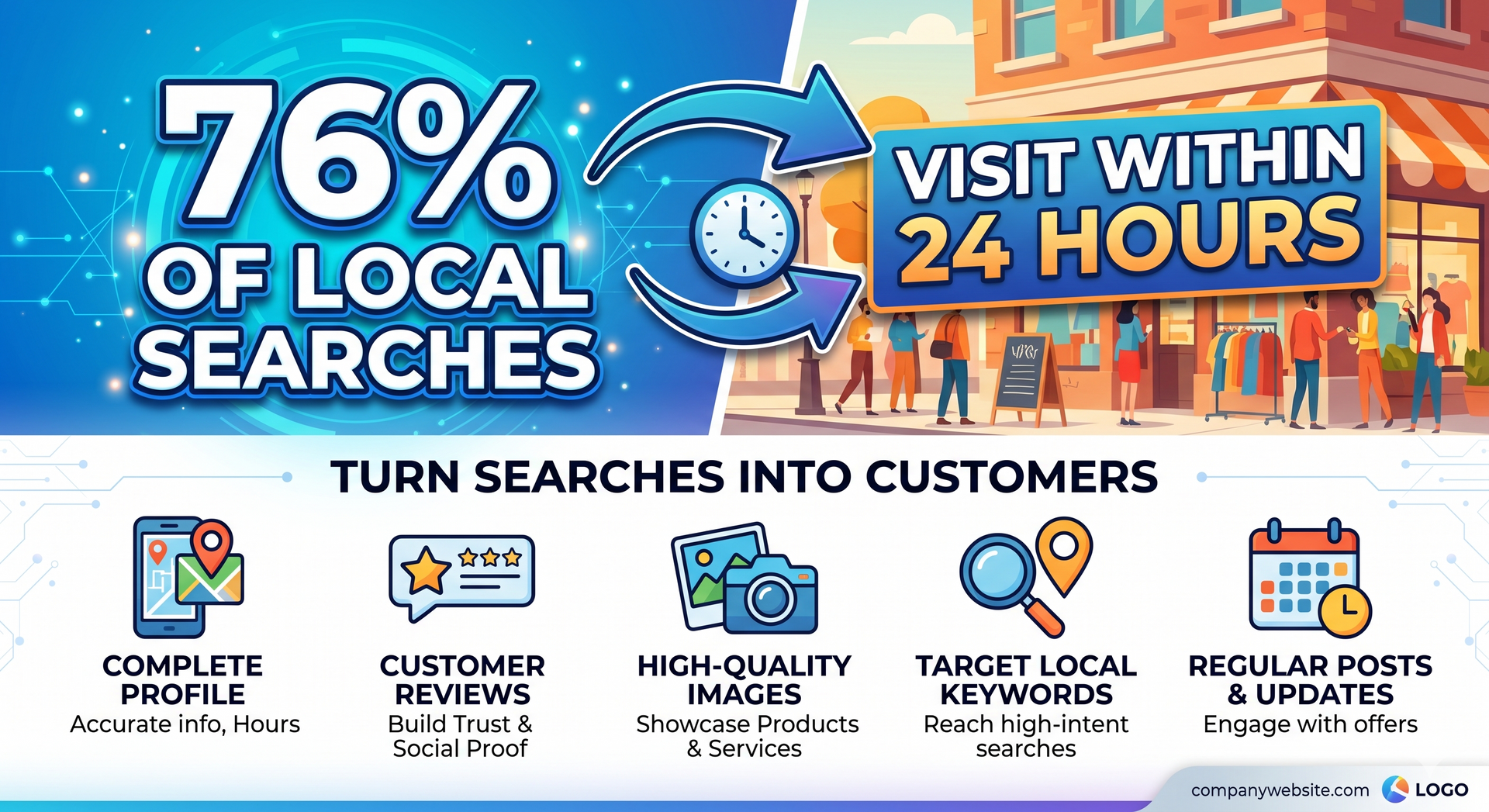
Did you know 76% of local searches lead to a store visit within 24 hours? Discover the simple Google My Business changes that turn searchers into buyers.

By Chet Holloway May 19, 2026
Invisible to customers? A Baltimore expert breaks down how an omnichannel marketing strategy drives revenue & visibility without expensive paid ads.
By Chet Holloway May 12, 2026
Online Search is How Homeowners Find Roofing Contractors While word-of-mouth referrals and repeat business remain important sources for finding contractors, today's homeowners increasingly conduct extensive research before choosing a roofing contractor, with 96% searching online for roofing companies. Online search engines account for 54% of how homeowners initially discover roofing services, making digital presence crucial for business growth. "This shift in consumer behavior creates both opportunity and urgency for roofing businesses. Homeowners spend significant time reading blogs, reviews, and case studies before making contact," says a spokesperson from Digital Marketing Pro Shop LLC , an agency helping Baltimore roofers enhance their online presence. "They want to understand their roofing problems, compare solutions, and identify contractors who demonstrate competence and reliability." Content Marketing Transforms Qualified Lead Generation Effective content marketing goes beyond posting random updates on social media. It requires a systematic approach that addresses specific homeowner concerns while showcasing the contractor's expertise and reliability. The most successful roofing companies follow four key principles that transform casual browsers iqualified leads. 1. Know Your Ideal Customer Demographics and Pain Points Understanding customer demographics prevents wasted time on unqualified leads. A contractor specializing in commercial metal roofing shouldn't create content targeting residential asphalt shingle replacements. Successful content marketing starts with identifying the specific customer segments a roofing business serves best. Pain points vary significantly among homeowner demographics. Young families might worry about roof safety and energy efficiency, while older homeowners may prioritize durability and low maintenance. Emergency situations like storm damage create urgent pain points requiring immediate solutions. Content that addresses these specific concerns attracts homeowners who need exactly what the contractor provides. 2. Use Clear Language and High-Quality Project Photos Technical jargon confuses potential customers rather than impressing them. Homeowners want straightforward explanations about roofing problems and solutions, delivered in language they can understand. The goal is educating customers, not demonstrating industry vocabulary mastery. High-quality project photos tell compelling stories that written descriptions cannot match. Before-and-after images of actual projects demonstrate competence while helping homeowners visualize potential outcomes for their properties. Stock photos lack authenticity—homeowners can spot generic images immediately, which undermines trust and credibility. 3. Optimize for Local Search and Google's 3-Pack Local search optimization is crucial for roofing companies since they serve specific geographic areas. Google's Local 3-Pack captures around 44% of all clicks and appears in 93% of local searches, making visibility in these results essential for lead generation. Optimization requires consistent business information across all online platforms, positive customer reviews, and location-specific content. Roofing companies that optimize their Google My Business profiles and create content targeting local search terms report 50% or more increases in local leads. The key is matching content to the specific searches homeowners perform when seeking roofing services in their area. 4. Include Strategic Calls to Action Even the most informative content fails without clear next steps for interested homeowners. Strategic calls to action guide readers from content consumption to actual contact, whether through phone calls, estimate requests, or consultation bookings. The most effective CTAs feel natural within the content flow rather than pushy or sales-focused.
By Chet Holloway May 12, 2026
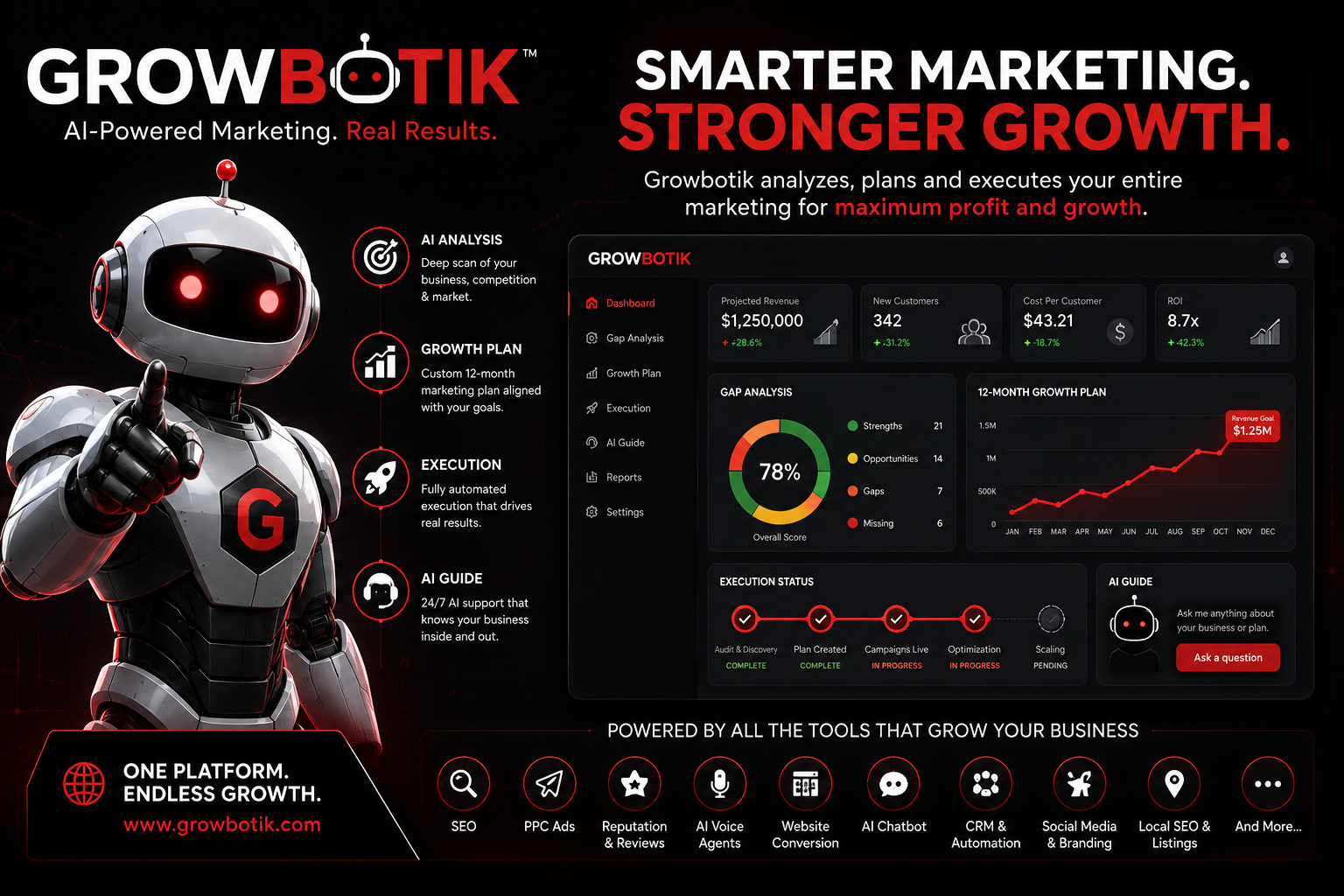
Predictive Revenue Architecture: A 12-Month Marketing Growth Plan Engineered by Growbotik
AI Search for Law Firms: How to Stay Visible When Clients Don’t Click Websit
By Chet Holloway May 10, 2026
AI Search for Law Firms: How to Stay Visible When Clients Don’t Click Websites. Learn how law firms can adapt to AI-driven search and keep attracting clients with four essential visibility strategies.
By Chet Holloway May 7, 2026
Stop guessing and start architecting. Discover Pro Ai: the smarter way for businesses to identify marketing gaps and build a data-backed 12-month growth plan
By Chet Holloway May 5, 2026
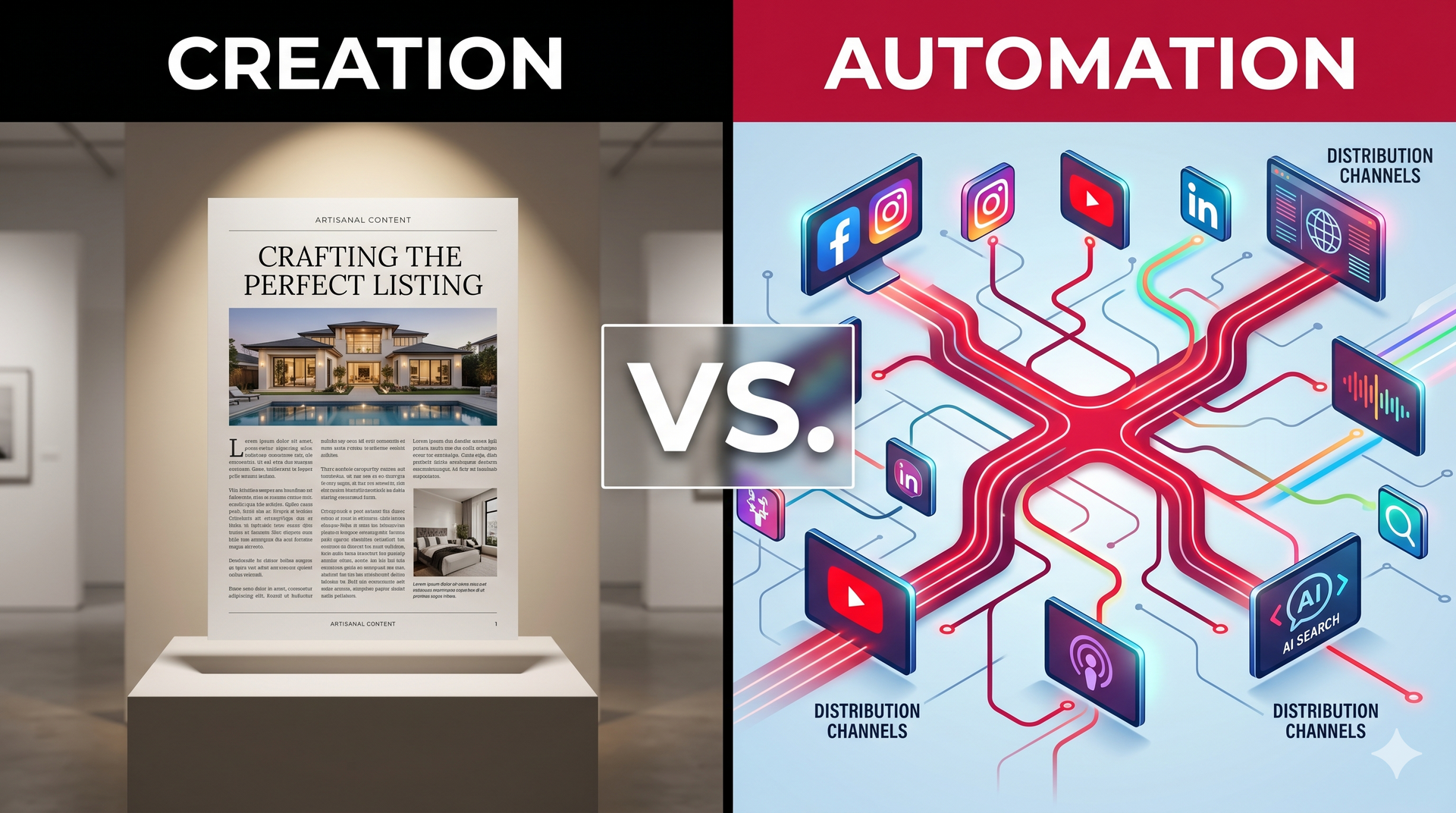
Creation is only half the battle. Discover why distribution automation is the key to ROI and how our high-precision architecture turns one asset into total market omnipresence.
By Chet Holloway May 5, 2026
Ready to dominate the local market? Baltimore content marketing experts at Digital Marketing Pro Shop explain how to architect a high-precision organic traffic engine
April 24, 2026
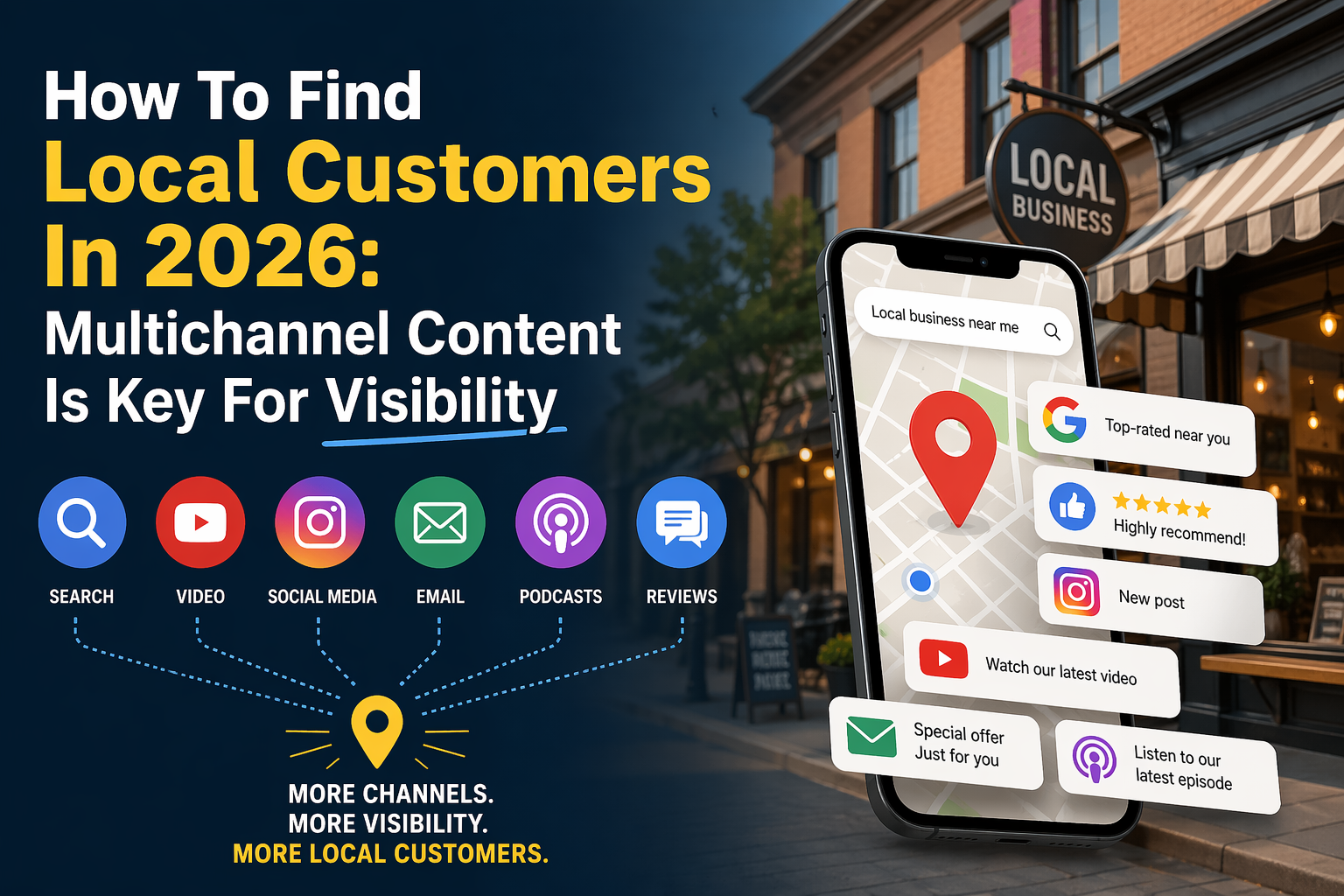
Looking for local customers in 2026? Discover why multichannel content is the key to local visibility and how to architect a strategy that dominates your market
Show More

Share this article