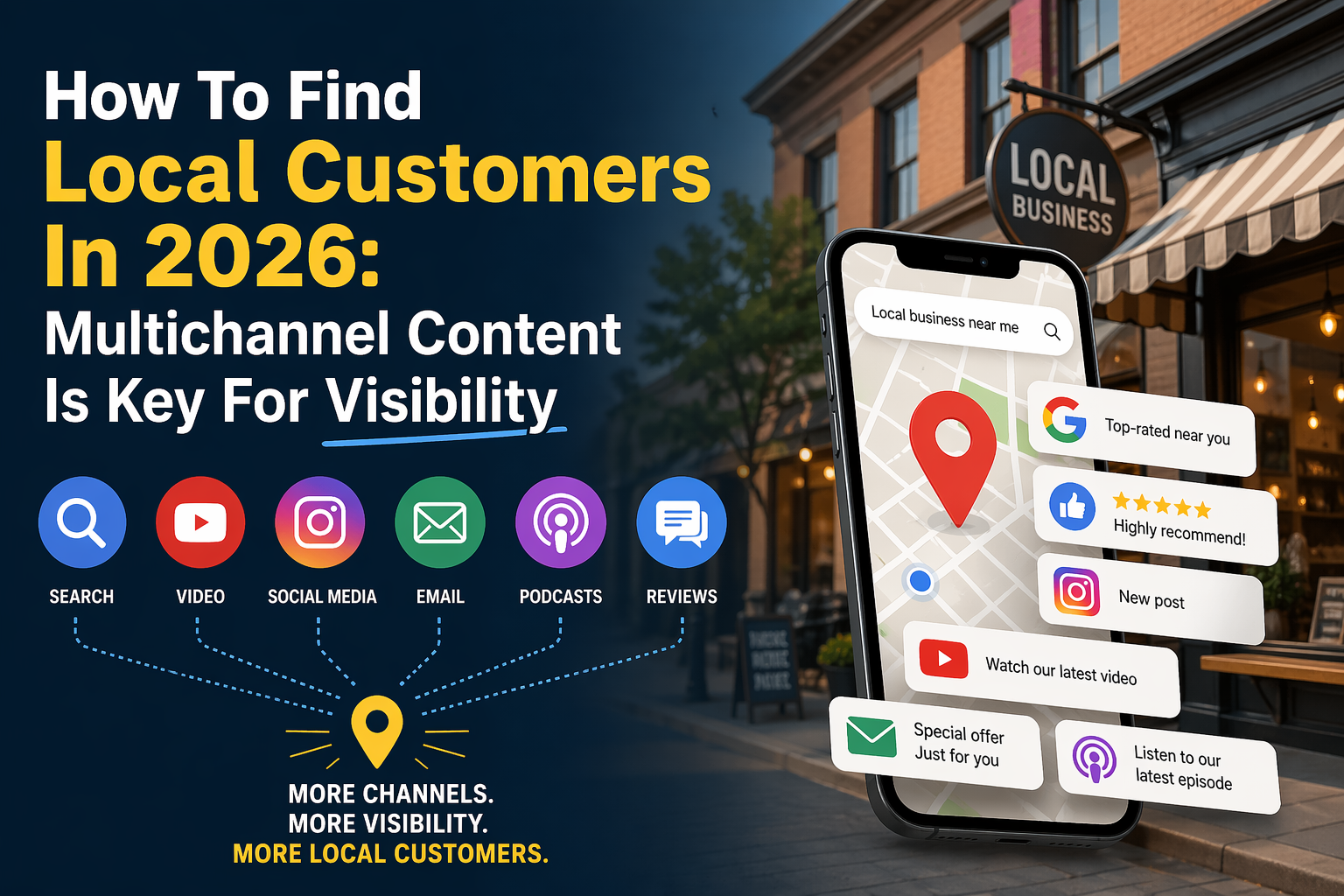

Find Local Customers In 2026


As seen on

And 300+ sites

Verified by  AmpiFire

Your Google rankings might be perfect, but if you're ignoring Instagram, TikTok, and AI chatbots, you're already invisible to a huge segment of local customers. The data on who's actually finding local businesses in 2026 will surprise you.

Key Takeaways:

  • Traditional search patterns are rapidly shifting as the overall generative AI market grew 76% year over year between December 2024 and December 2025, fundamentally changing how customers discover local businesses.
  • Hyperlocal targeting is becoming increasingly critical, moving beyond generic city-level rankings and requiring neighborhood-specific content strategies for better local visibility.
  • Multichannel content strategies deliver proven results, with businesses using three or more channels achieving 287% higher purchase rates than single-channel approaches.
  • Voice-optimized content is becoming essential for visibility as voice search continues growing in popularity.


The local search landscape is experiencing unprecedented transformation. What worked for local SEO just two years ago may leave businesses invisible to potential customers in 2026. The shift goes far beyond algorithm updates—it represents a complete reimagining of how consumers find and engage with local businesses.


Traditional Search Patterns Are Shifting Fast


Google's grip on local search discovery is loosening significantly. While 72% of consumers still use Google for local business information, only 61% of 18- to 24-year-olds rely on the search giant. This younger demographic increasingly turns to Instagram (67%) and TikTok (62%) for local business information. The trend signals a fundamental shift that will reshape local visibility strategies entirely.


The fragmentation extends beyond social platforms into AI-powered search experiences. According to a Consumer Reports survey in April 2025, one-third of Americans claim to have used an AI chatbot in the past three months, with ChatGPT being the most used at 19%. Additionally, 31% use Instagram for local business reviews while 20% rely on TikTok as review platforms. Digital Marketing Pro Shop emphasizes that businesses must prepare for this multi-platform reality before competitors adapt.


Most local visibility strategies still focus exclusively on Google rankings. This disconnect creates massive opportunities for businesses willing to adopt multichannel approaches early.


AI Chatbots Transform How Customers Discover Local Businesses


Generative AI Market Growth Signals Major Trend


The overall generative-AI market grew 76% year over year between December 2024 and December 2025. This dramatic increase indicates AI-driven search is becoming mainstream rather than experimental. Local businesses can no longer treat AI chatbot optimization as a future consideration—it's happening now.


However, AI assistants currently complement rather than replace traditional platforms like Google Maps or Yelp. They often draw from limited local data, creating opportunities for businesses that provide structured information across multiple channels. The key lies in ensuring consistent, discoverable content that AI systems can easily access and understand.


AI Mode Changes Search From Keywords to Conversations


Google's AI Mode, which rolled out to all U.S. users in mid-June 2025 and globally in July 2025, transforms search from keyword-based queries to conversational interactions. Instead of searching "dentist near me," users might ask, "What dentist in my neighborhood accepts my insurance and has evening appointments?"


This shift requires content optimization for natural language patterns rather than keyword density. Businesses must create content that answers conversational questions while maintaining the depth and authority that AI systems value. The change represents the most significant local search evolution since mobile-first indexing.


Hyperlocal Targeting Replaces Generic City Rankings


Neighborhood-Specific Content Drives Better Results


City-level rankings are becoming obsolete as search algorithms develop sophisticated neighborhood understanding. Search for "best dentist" in different Chicago neighborhoods, and dramatically different results appear. Google's algorithm now builds detailed neighborhood profiles including demographic data, business ecosystem analysis, and cultural characteristics.


Hyperlocal content strategy involves creating location-focused content such as neighborhood service guides, local event coverage, and area-specific blog posts. This approach attracts traffic from specific neighborhoods while building authentic community connections. Businesses that optimize for neighborhood-specific terms rather than generic city keywords see significant improvements in organic traffic.


Generic city-level content no longer resonates with modern algorithms or local customers. Winning hyperlocal SEO requires granular knowledge of specific neighborhoods served, including demographics, economic indicators, and cultural characteristics unique to each area.


Entity Relationships Complement Quality Backlinks


Entity-based SEO is superseding backlink metrics as the primary trust signal. The algorithm measures how deeply businesses connect to neighborhood entities through relationship networks. A single authentic relationship with a neighborhood institution outweighs dozens of superficial mentions or generic directory listings.


Successful local businesses document these relationships through collaborative content and strategic partnerships that demonstrate genuine community involvement. This approach builds trust signals that algorithms recognize while creating meaningful connections with potential customers who value local engagement.


Multichannel Strategy Delivers Proven Business Impact


Multichannel marketing strategies prove highly effective, with brands utilizing three or more channels achieving a 287% higher purchase rate compared to single-channel approaches. Customer retention improves by up to 91% when customers interact with brands across multiple channels. These statistics underscore why multichannel content strategies are essential for local visibility.


1. Content Ecosystem Mapping For Platform Consistency


Google compiles business information from multiple sources to verify accuracy and build complete profiles. If a Google Business Profile emphasizes convenience while the website talks about premium quality, that disconnect creates trust issues. Consistent messaging, visual branding, and content across digital platforms can boost revenue by 10-33% while fostering stronger customer trust and loyalty.


Content ecosystem mapping involves auditing what story each platform tells, then bringing them into alignment. This process ensures that whether customers discover the business through social media, voice search, or traditional search, they encounter consistent messaging that builds confidence and drives conversions.


2. Voice-Optimized Content For Growing Voice Search


Voice search continues growing in popularity, necessitating optimization of content with conversational, question-based terms. Voice queries tend to be longer and more specific than typed searches, requiring content that addresses complete questions rather than isolated keywords.


Businesses must create content that answers natural spoken questions like "Where can I get my car repaired near downtown that's open late?" rather than optimizing for "car repair downtown." This shift requires rethinking content structure to address the full customer journey through conversational touchpoints.


3. Visual-First Assets For Social Discovery


Visual content drives discovery on platforms where younger demographics increasingly search for local businesses. Instagram and TikTok require visual-first strategies that showcase products, services, and behind-the-scenes content in engaging formats. Businesses implementing visual-focused social media strategies alongside traditional local SEO tactics see significant improvements in foot traffic and online inquiries.


Visual assets must tell compelling stories while maintaining consistency with other platform messaging. This approach ensures that discovery through social platforms leads to conversions rather than confusion about brand positioning or service offerings.


Start Your Multichannel Content Strategy Before Competitors Catch Up


The window for gaining a competitive advantage through multichannel strategies is narrowing rapidly. Businesses that adapt early will establish strong positions across emerging platforms before competitors recognize the shift. The transformation isn't coming—it's already happening in major markets across the country.


Success requires immediate action across three key areas: platform diversification, content optimization for AI and voice search, and hyperlocal community engagement. Businesses waiting for these trends to fully mature will find themselves competing against established multichannel presences that built authority while the opportunity was wide open.


The companies thriving in 2026's local search landscape will be those that recognized the multichannel imperative early and built strategies addressing the full spectrum of customer discovery methods. The question isn't whether to adopt multichannel content strategies—it's how quickly to implement them before the competitive landscape shifts permanently.


Recent Posts

Can AI Find Your Business? How Multichannel Content Helps Build Local Visibility
By Chet Holloway June 12, 2026
Is your local business ready for AI search? Learn how multichannel content marketing and authoritative distribution expand your visibility in AI-driven engines.
HVAC Marketing Strategies: Multichannel Insights for Growth
By Chet Holloway June 12, 2026
Discover why single-channel HVAC marketing fails. Learn how local mobile searches, the Google Map Pack, and multichannel strategies drive qualified leads.

Human Element in AI Content Marketing: 2026 Strategy
By Chet Holloway June 9, 2026
Discover why human judgment, named expertise, and clear positioning are the ultimate competitive advantages as AI becomes standard content infrastructure in 2026.
Chiropractic Marketing: Winning AI Search & After-Hours Bookings
By Chet Holloway June 8, 2026
Nearly half of patients use AI tools like ChatGPT to find local chiropractors. Learn the multichannel content strategy to capture these high-value leads.
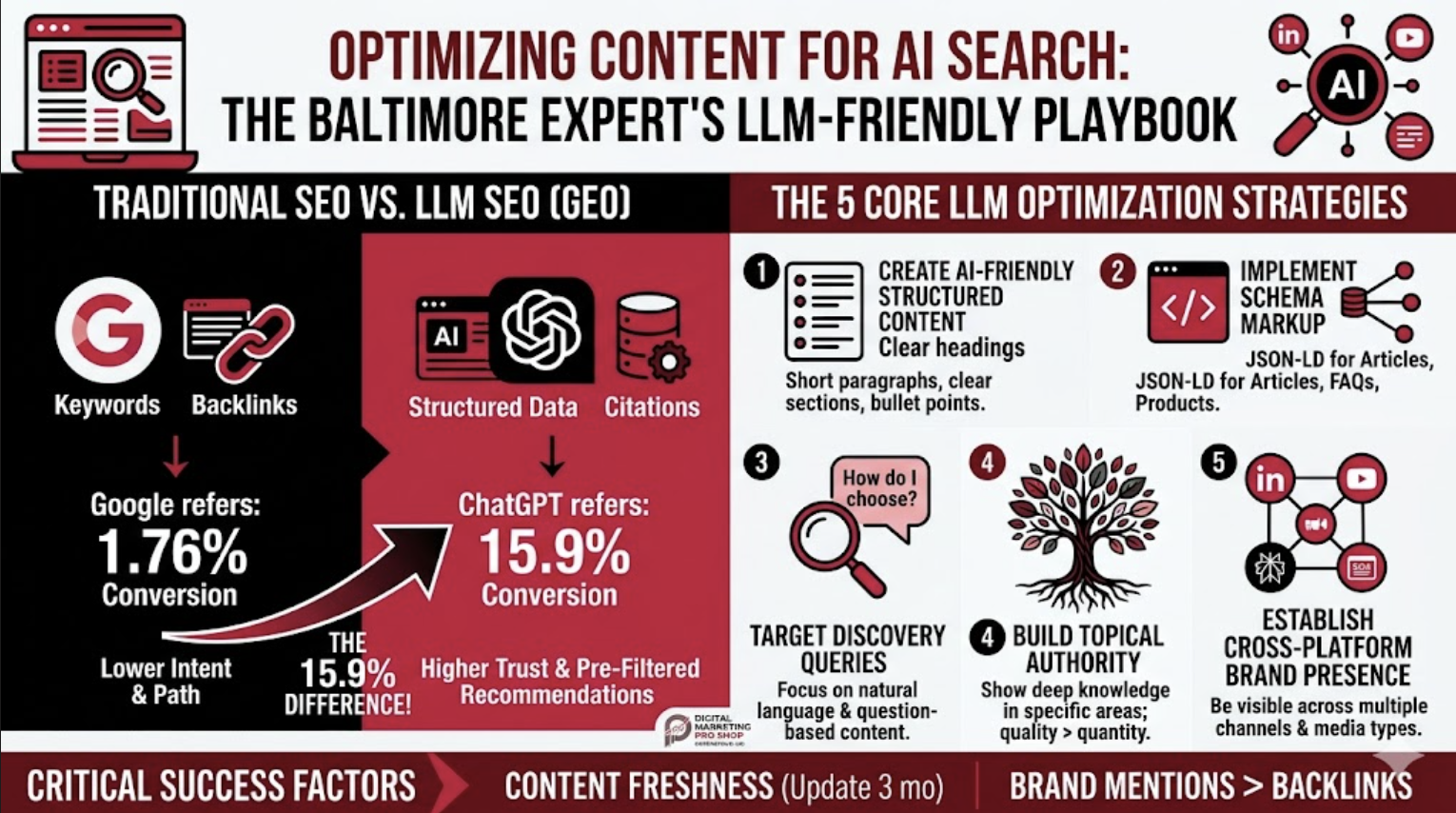
LLM SEO: How to Optimize Your Content for AI Searc
By Chet Holloway May 29, 2026
Discover how AI search optimization works. Learn why ChatGPT traffic converts at 15.9% and how to keep your Baltimore business visible in AI citations
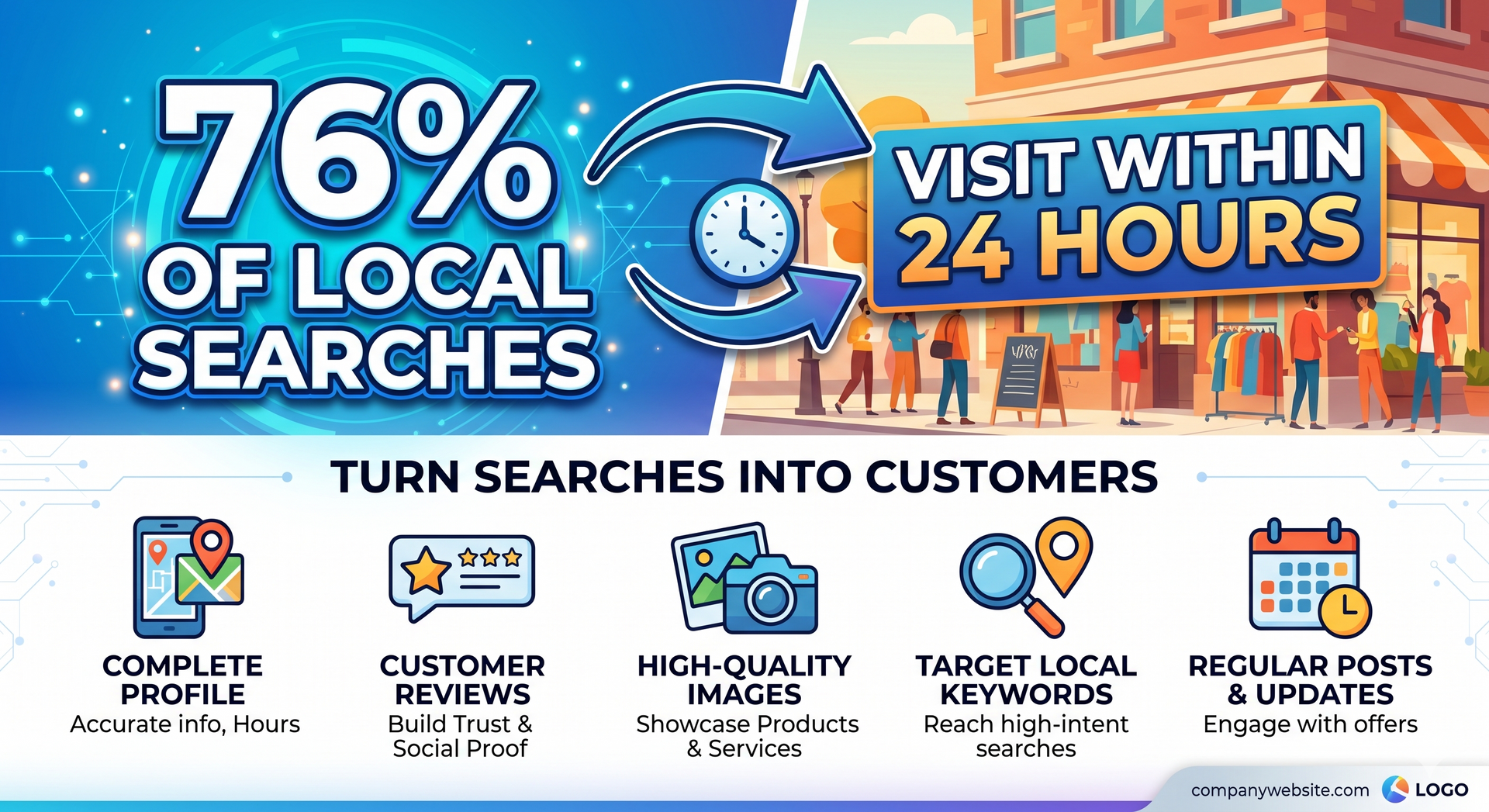
google-my-business-optimization-local-seo-tips
By Chet Holloway May 28, 2026
Did you know 76% of local searches lead to a store visit within 24 hours? Discover the simple Google My Business changes that turn searchers into buyers.
By Chet Holloway May 22, 2026
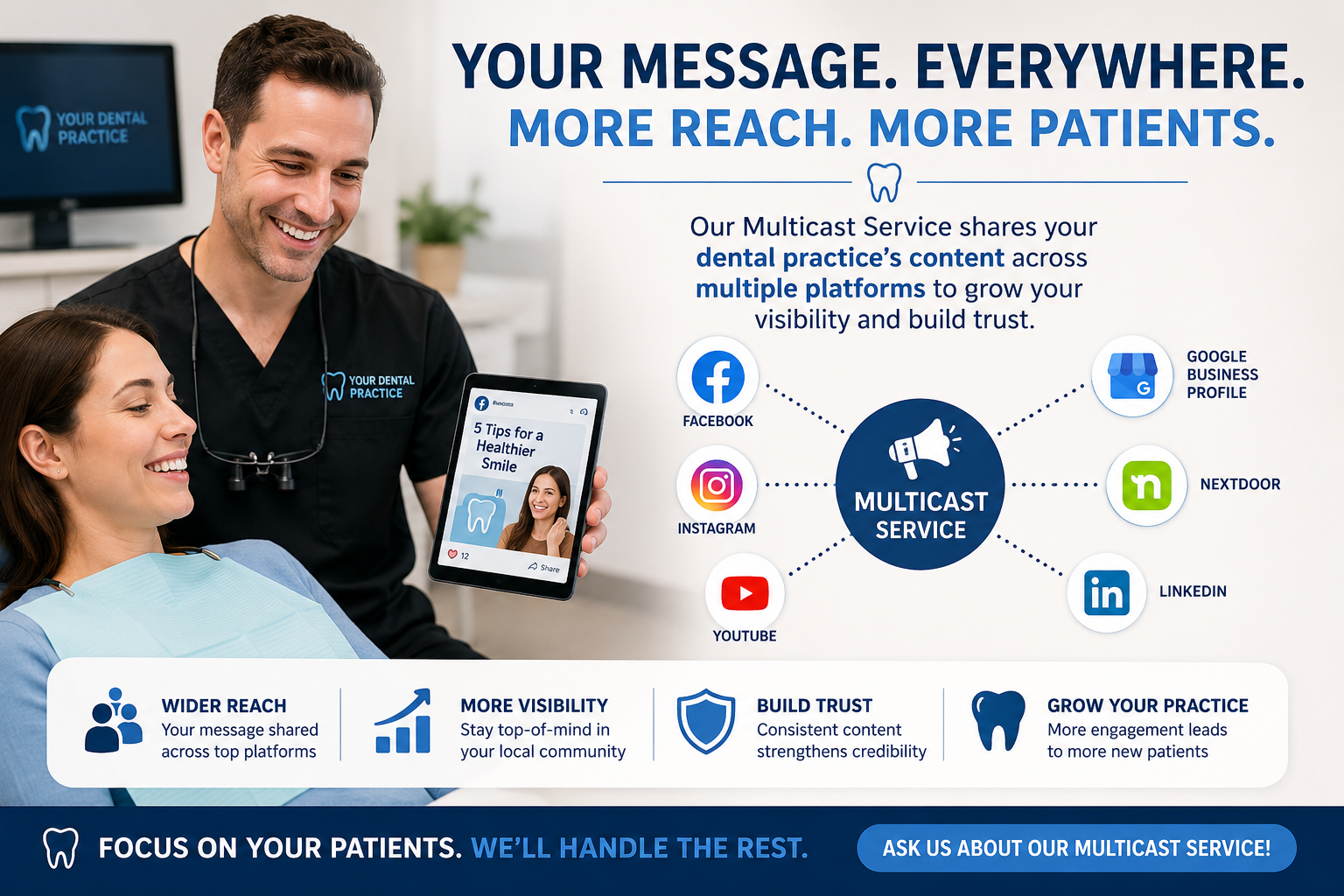
AI search engines like ChatGPT and Perplexity only mention a handful of brands per query. Multicasting, crawlable reviews, and consistent brand mentions across independent sources are what get your business recommended.

By Chet Holloway May 19, 2026
Invisible to customers? A Baltimore expert breaks down how an omnichannel marketing strategy drives revenue & visibility without expensive paid ads.
By Chet Holloway May 12, 2026
Online Search is How Homeowners Find Roofing Contractors While word-of-mouth referrals and repeat business remain important sources for finding contractors, today's homeowners increasingly conduct extensive research before choosing a roofing contractor, with 96% searching online for roofing companies. Online search engines account for 54% of how homeowners initially discover roofing services, making digital presence crucial for business growth. "This shift in consumer behavior creates both opportunity and urgency for roofing businesses. Homeowners spend significant time reading blogs, reviews, and case studies before making contact," says a spokesperson from Digital Marketing Pro Shop LLC , an agency helping Baltimore roofers enhance their online presence. "They want to understand their roofing problems, compare solutions, and identify contractors who demonstrate competence and reliability." Content Marketing Transforms Qualified Lead Generation Effective content marketing goes beyond posting random updates on social media. It requires a systematic approach that addresses specific homeowner concerns while showcasing the contractor's expertise and reliability. The most successful roofing companies follow four key principles that transform casual browsers iqualified leads. 1. Know Your Ideal Customer Demographics and Pain Points Understanding customer demographics prevents wasted time on unqualified leads. A contractor specializing in commercial metal roofing shouldn't create content targeting residential asphalt shingle replacements. Successful content marketing starts with identifying the specific customer segments a roofing business serves best. Pain points vary significantly among homeowner demographics. Young families might worry about roof safety and energy efficiency, while older homeowners may prioritize durability and low maintenance. Emergency situations like storm damage create urgent pain points requiring immediate solutions. Content that addresses these specific concerns attracts homeowners who need exactly what the contractor provides. 2. Use Clear Language and High-Quality Project Photos Technical jargon confuses potential customers rather than impressing them. Homeowners want straightforward explanations about roofing problems and solutions, delivered in language they can understand. The goal is educating customers, not demonstrating industry vocabulary mastery. High-quality project photos tell compelling stories that written descriptions cannot match. Before-and-after images of actual projects demonstrate competence while helping homeowners visualize potential outcomes for their properties. Stock photos lack authenticity—homeowners can spot generic images immediately, which undermines trust and credibility. 3. Optimize for Local Search and Google's 3-Pack Local search optimization is crucial for roofing companies since they serve specific geographic areas. Google's Local 3-Pack captures around 44% of all clicks and appears in 93% of local searches, making visibility in these results essential for lead generation. Optimization requires consistent business information across all online platforms, positive customer reviews, and location-specific content. Roofing companies that optimize their Google My Business profiles and create content targeting local search terms report 50% or more increases in local leads. The key is matching content to the specific searches homeowners perform when seeking roofing services in their area. 4. Include Strategic Calls to Action Even the most informative content fails without clear next steps for interested homeowners. Strategic calls to action guide readers from content consumption to actual contact, whether through phone calls, estimate requests, or consultation bookings. The most effective CTAs feel natural within the content flow rather than pushy or sales-focused.
By Chet Holloway May 12, 2026
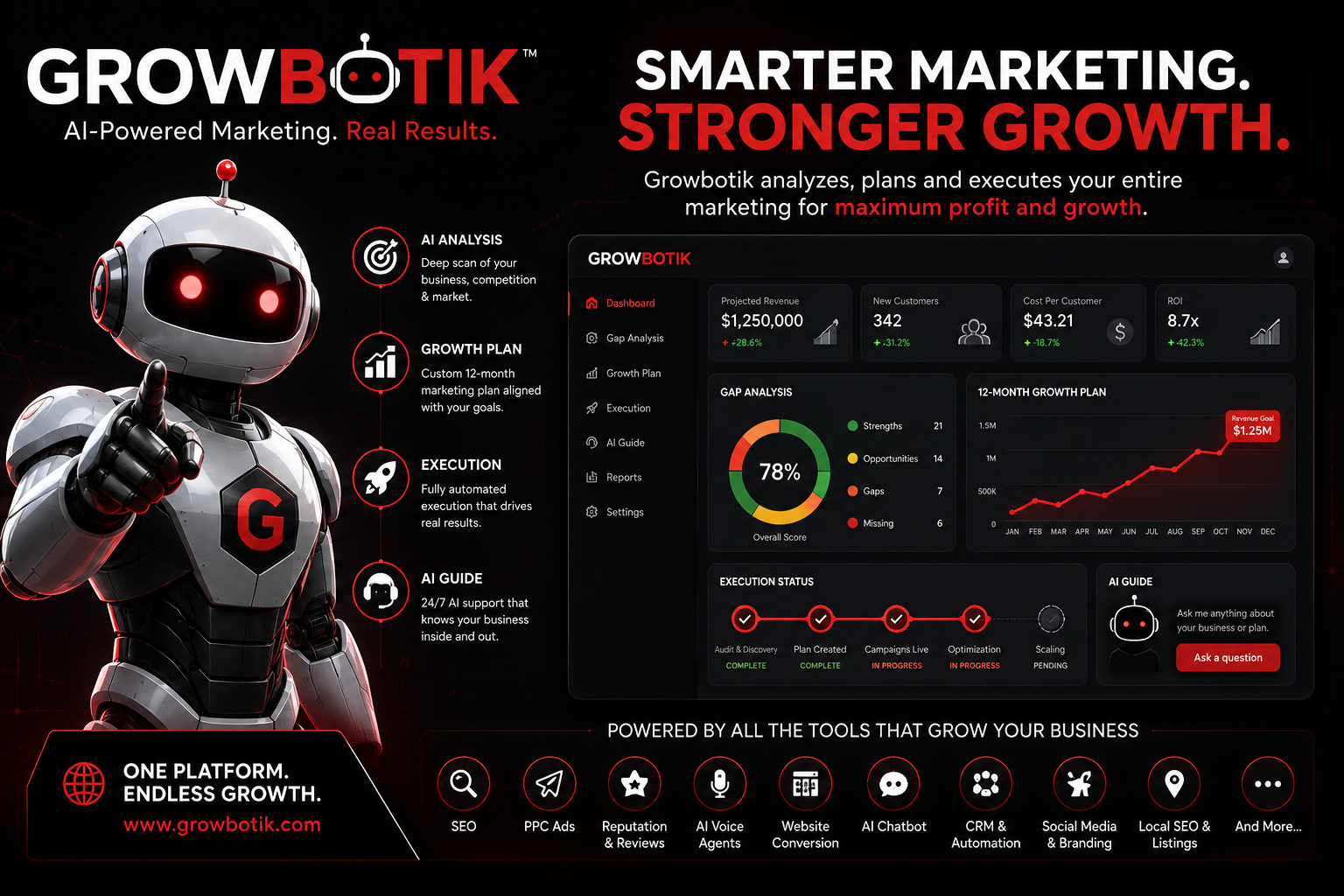
Predictive Revenue Architecture: A 12-Month Marketing Growth Plan Engineered by Growbotik
AI Search for Law Firms: How to Stay Visible When Clients Don’t Click Websit
By Chet Holloway May 10, 2026
AI Search for Law Firms: How to Stay Visible When Clients Don’t Click Websites. Learn how law firms can adapt to AI-driven search and keep attracting clients with four essential visibility strategies.
By Chet Holloway May 7, 2026
Stop guessing and start architecting. Discover Pro Ai: the smarter way for businesses to identify marketing gaps and build a data-backed 12-month growth plan

By Chet Holloway May 5, 2026
Creation is only half the battle. Discover why distribution automation is the key to ROI and how our high-precision architecture turns one asset into total market omnipresence.
By Chet Holloway May 5, 2026
Ready to dominate the local market? Baltimore content marketing experts at Digital Marketing Pro Shop explain how to architect a high-precision organic traffic engine
By Chet Holloway April 24, 2026
Stop renting your audience and start building organic equity. Learn how a strategic content architecture creates sustainable, long-term growth for your business
By Chet Holloway April 8, 2026
Own the search box before the click even happens. Discover how SBO puts your brand in Google’s auto-suggest for total market dominance
April 1, 2026
Move beyond temporary clicks. Discover the high-precision architecture behind sustainable organic traffic and how content equity drives predictable revenue.
By Chet Holloway March 26, 2026
Your organic traffic just tanked, and you're frantically searching for answers. Before you panic and overhaul everything, there's one underlying issue causing most sudden drops, and it's probably not what you think. The fix requires rethinking how you create content entirely.
By Chet Holloway March 6, 2026
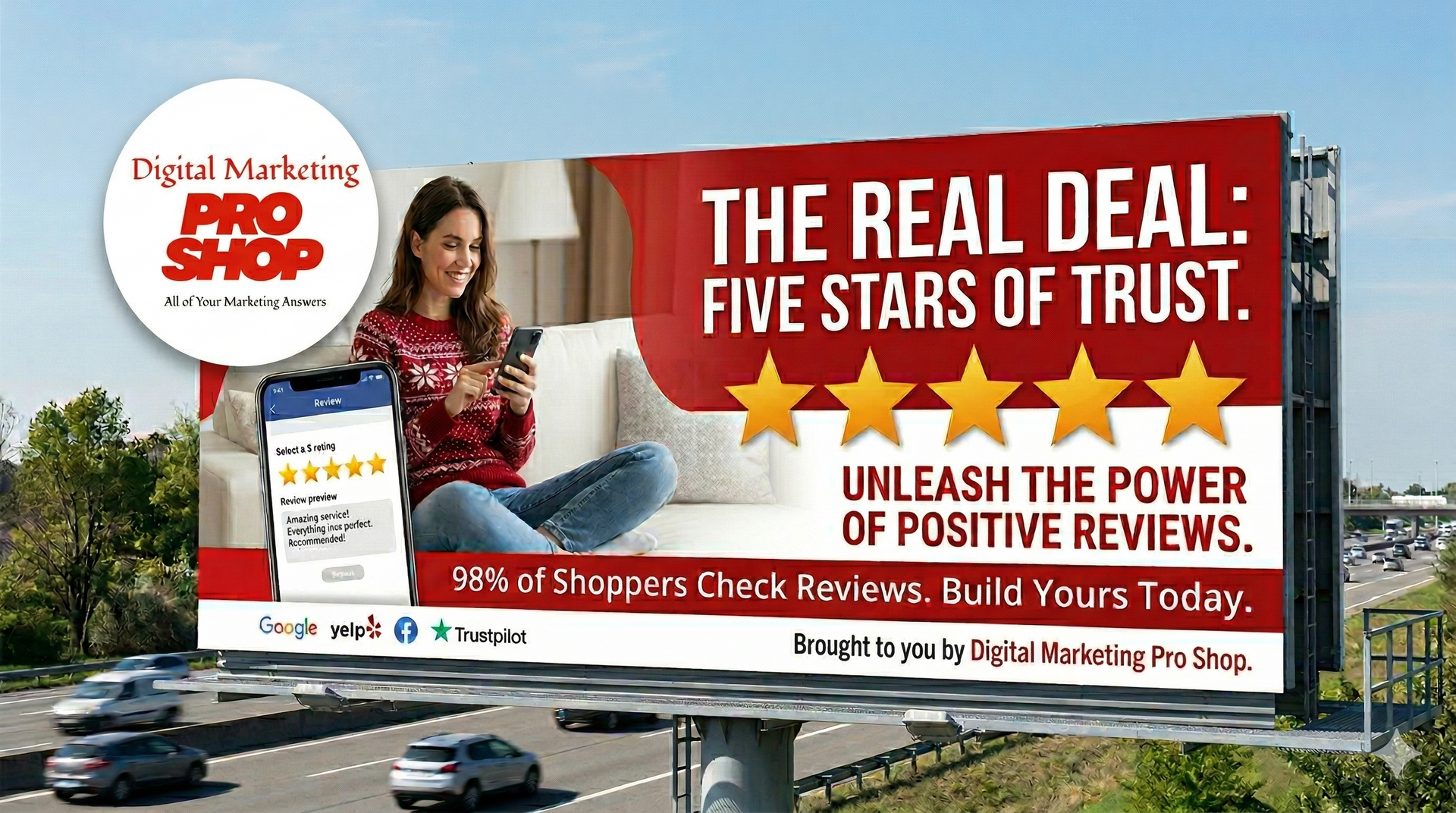
Transform your customer feedback into a predictable revenue engine. Learn how we use high-fidelity data to audit and optimize your business reputation.
By eyal March 6, 2026
Bridge the gap between site visits and sales. Discover high-precision strategies to engage visitors, boost brand loyalty, and maximize your customer lifetime value.
Share this article